

CNG Station
Why Choose Us
Endurance Energy Equipment Co., Ltd is the leading manufacturer of natural gas and hydrogen equipment. With world class technology in gas purification, liquefaction, regasification, peak shaving, gas filling systems and related premium core equipment, we have made remarkable achievements, especially in CNG and LNG filling systems. We provide complete equipment integration, automation control solutions, process engineering, general contracting, financing and complete lifecycle services for natural gas and unconventional natural gas. We specialize in producing Mobile CNG Station, Integrated CNG Station, CNG Daughter Station, Pressure Reduction Station, CNG Compressor, and other CNG Stations equipment.
Customized Process Flows
Meticulous planning is the key to success. Our engineering experts are world leaders in the development of bespoke plants and process technologies. We team up with our customers, working closely with them to engineer the optimum process-no matter how complex -based on state-of-the-art proprietary and proven licensed technologies.
Construction And Commissioning
Constructing an industrial is a mammoth, multi-step undertaking spanning the entire technology, engineering, construction value chain. Through monitoring centers, assembly partners and network of yards, we ensure that all resources and experts are in the right place at the right time. We are also the partner of choice when comes to the all-important step in the process - commissioning. Our commissioning engineers ensure that your multi-million plant fully ready for operations before they efficiently smoothly hand it to you.
Global Procurement Network For Cost And Reliability Gains
Our logistics teams transport modules weighing several thousand metric tons to the most remote corners of the globe. But we also ship smaller, single components, always choosing the fastest route to get urgent deliveries on site, on time. No matter what you need, we make the impossible possible -with the backing of our dedicated supplier approval concept coupled with a reliable, scalable and transparent request and order process. This enables us to offer you outstanding quality, on-time deliveries and a host of value-add services at great prices.
Rich Experience
The market share of our CNG dispensers and LNG dispensers has stayed on top in China since 2003 with over 24,000 sets metering units selling record, and has been installed globally including the Middle East, Pakistan, Bangladesh, Thailand, Indonesia, Nigeria, India, Uzbekistan, Turkey , Russia etc.
-
 Front Natural Gas DryerThe Front Natural Gas Dryer is a vital piece of equipment designed to remove moisture from natural gas, ensuring its quality and purity. This dryer is essential in various sectors of the natural gasAdd to Inquiry
 -
 Compressor StationMeticulous planning is the key to success. Our engineering experts are world leaders in the development of bespoke plants and process technologies. We team up with our customers, working closely withAdd to Inquiry
 -
 CNG Daughter StationEndurance Energy Equipment Co., Ltd is a member of Endurance Industry Corporation, a leading supplier of technology and services in multiple industries including oil & gas equipment, environmentalAdd to Inquiry
 -
 Hydraulic Booster CompressorEndurance Energy Equipment Co., Ltd is a member of Endurance Industry Corporation, a leading supplier of technology and services in multiple industries including oil & gas equipment, environmentalAdd to Inquiry
 -

-
 CNG Booster Compressor For Daughter StationBooster compressor for CNG daughter station in Nigeria marketAdd to Inquiry
 -

-
 High Flow CNG DispenserThe dispenser can be configured with single hose with compact size to reduce investment, which is especially suitable for private, micro or mobile CNG stations with less gas filling demand.Add to Inquiry
 -
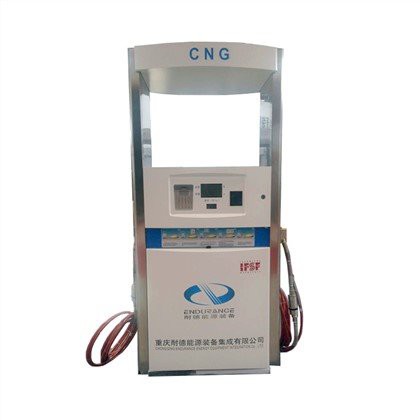 Dual Hose CNG DispenserDual Hose CNG Dispenser is a kind of common CNG refueling equipment. It has micro control processor unit controlled intelligent standard flow rate dispenser with function of trade settlement andAdd to Inquiry
 -
 CNG Time Fill PostJQ Series CNG Filling Post for Tube Trailer is a type of CNG dispenser used for refueling CNG tube trailers, HCV, MCV or LCV transport vehicles in the CNG mother stations. It is designed with highAdd to Inquiry
 -
 YZ Series CNG CompressorYZ Series CNG Compressors is suitable for CNG satellite station. The YZ Series CNG Compressor can provide refueling service to vehicles where there is no natural gas pipeline network. It has theAdd to Inquiry
 -
 CNG Priority PanelThe CNG Priority Panel is mainly composed of sequence valve, high pressure ball valve, check valve, pressure gauge, high pressure joint, high pressure ferrule and high pressure pipeline.Add to Inquiry


Unlike gasoline or diesel stations, compressed natural gas (CNG) stations are not "one size fits all." Building a CNG station for a retail application or a fleet requires calculating the right combination of pressure and storage needed for the types of vehicles being fueled. Making the right choices about the size of the compressor and the amount of storage at the station will impact the cost of fuel and range for vehicles. If you want to know the specifications and prices of CNG Stations, please contact us!
Types of CNG Stations

Mobile CNG Station
It is a highly integrated CNG filling station. The dispenser, compressor, gas storage cylinder and explosion-proof control cabinet are integrated in one container. The refueling station can be used directly without additional installation.
Main Benefits of Mobile CNG fueling station:
●Mobility -can be easily moved to any locations
●Easy deployment (as little as 3 hours to start operating)
●Flexible inlet range
●Discharge range from 400-3000Nm3/h
●Includes dryer
●Complete remote web base monitoring
●Can be used for multiple applications providing numerous high revenue opportunities
Integrated CNG Station
The CNG In a Box system is an innovative solution to build a CNG station for you in the shortest period ever. Everything in a traditional station is prefabricated in a standard ISO container, tested in the factory, delivered to your site, and ready to use immediately through a simple plug-and-play process.
Advantage:
●Gas Station comprehensive safety
●Integration of all CNG Station equipment in Single Control System
●Data Processing Management; Integration with Enterprise Data Management Systems
●CNG Station operation efficiency enhancement; Reducing Idle Time
●Automated report creation


CNG Daughter Station
CNG daughter booster station means CNG facilities not connected to natural gas pipeline and such CNG dispensing stations where mobile or stationary cascades are connected to the booster compressor for increase in discharge pressure for refueling of the vehicles.
Advantage:
●The compressor is designed for automated unmanned operation, incorporating various safety features to ensure safe and steady operation with low operating costs.
●A fail-safe mode is implemented for enhanced safety. All critical parameters are monitored and controlled by the PLC according to set values, triggering alarms in case of abnormal operations. Additionally, a troubleshooting guide is accessible on the HMI.
●The control system is equipped with surge protectors and relays to safeguard the electrical system. A phase sequence preventer is installed to prevent the reverse rotation of the motor.
●A Thermal Magnetic Over-current Relay is incorporated into the control panel to provide motor protection.
●The skid includes one Emergency Shut Down (ESD) system, and another ESD is integrated into the PLC. Both are interlocked, allowing the compressor to be halted in case of an emergency by activating either ESD.
CNG Pressure Reduction Station
Pressure reduction stations are necessary to regulate the high incoming pipeline pressure in order to meet the desired equipment pressure. Plants utilize various equipment, such as gas compressors, engines, turbines, burners, etc., each with a specific operating pressure range set by the equipment manufacturer.
Advantage:
System Efficiency: PRS allows for efficient and controlled distribution of natural gas, optimizing the performance of the entire gas network. By reducing the pressure to an appropriate level, energy losses and leakages are minimized, ensuring that the gas reaches end-users in an efficient manner.
Safety and Reliability: Gas pressure reduction stations play a vital role in maintaining a safe and reliable gas supply. By regulating the pressure, they prevent the occurrence of high-pressure events that could lead to leaks, equipment damage, or potential hazards for both workers and the public.
Flexibility in Distribution: Pressure reduction stations provide the flexibility to accommodate varying demand patterns and load fluctuations. By regulating the pressure according to the specific requirements of the local distribution system, PRS ensures that gas is delivered consistently to consumers, regardless of changes in demand.

What are the components of a CNG station?

Emergency Shutdown Valve (ESD)
In the event of an ESD closure, the bypass line will be used to slowly increase the pressure to resume operation, so the system is not pressurized too quickly during startup.
During regular operation, natural gas is coming into the station at 40-45 PSI. When leaving the station, the final pressure will be between 1250-1300 PSI.
Slug Catcher
The large amounts of hydrocarbon liquids and water that the pig pushes into the slug catcher travels to storage tanks on the location in the video.
At this point, a site may use an emulsion breaker to aid this separation process of resources.
After the slug catcher, you may notice more pipes with empty end connections. The station in the video is built to be modular and allow for other equipment to be added in the future if the producer decided it was necessary for increased capacity.
After much of the initial fluids have been removed, the natural gas moves into a second vessel-a filter separator.
Filter Separator
A filter separator differs from a standard separator vessel in that it uses filter elements to remove contaminants rather than using mechanical devices and other principles of separation. For more on filter separator operation, watch our filter separator video.
This filter separator has a liquid boot design where the liquids fall into the lower portion of the vessel. This is a 2-stage separator, not to be confused with a 2-phase separator. In the first stage liquids fallout and their levels are controlled by this level controller.
In the second stage when the gas passes through the filters, the liquids drop on the other side of the boot and are controlled by a second level controller.
The gas then flows into the suction header and into individual inlets for each compressor.
Pressure Reducing Pilot / Suction Control Valve
After the suction control valve, the natural gas travels through underground pipelines into the inlet scrubber of the compressor that is located on the other side of a sound barrier wall.
Compressors
Major Differences of LPG, LNG, CNG
Composition
While LPG is comprised of propane and butane, LNP and CNG are mainly comprised of methane.
Storage
LPG is stored under high pressure. LNG is not pressurized; the contents of CNG are stored in tanks designed to release the gas more slowly.
Processing
Light pressure is used to liquefy LPG; LNG is liquefied through exposure to extremely low temperatures, and CNG has a high compression ratio thanks to its octane rating.
Mode of Transportation
Both LPG and CNG are stored and transported in tanks or cylinders, whereas specially-designed cryogenic tanks and pipelines are used to store and transport LNG respectively.
Safety
Since LNG is not refrigerated, not under pressure, it is safer than LPG. CNG is safer than both LPG and LNG because it has a lighter weight than air, meaning it releases into the atmosphere when it spills.
Usage
LPG is typically used in refrigeration, agriculture and industrial sectors. It is also used at home in power cooking equipment and heating appliances. CNG is used in automobiles as a substitute for gasoline. LNG is used for heavy-duty equipment, gas valves, machinery and infrastructure.
What are the requirements for installing a CNG station?
Adherence to local, regional, and national regulations governing the installation and operation of CNG stations is crucial. This includes obtaining necessary permits and approvals.
Compressors, storage equipment, dispensers, and safety features. Verify that the selected site complies with zoning regulations and land-use policies for CNG station installations.
Implement comprehensive safety measures, including emergency shutdown systems, ventilation systems, fire suppression systems, and proper signage. Develop a comprehensive emergency response plan that includes procedures for gas leaks, fires, and other potential hazards. Establish a regular maintenance schedule for all station components to ensure continued reliability and safety. Maintain thorough documentation of installation plans, safety measures, maintenance records, and regulatory compliance for reference and audits.
Install systems for continuous monitoring of gas quality to ensure that the dispensed CNG meets specified standards.
Conduct an environmental impact assessment to ensure that the installation meets environmental standards and minimizes ecological impact.

Businesses can choose from several types of CNG fueling stations, including fast-fill stations that receive low-pressure fuel from the local distribution network and discharge it rapidly into vehicles' tanks.
Time-fill stations are best suited for heavy vehicles with large tanks that refuel nightly at a central location. These stations receive natural gas at a low pressure from utility companies and the gas is compressed directly into the vehicle. Time-fill stations tend to be custom-designed. They are designed based on the total number of vehicles, their capacity and the time available to fill them, among other factors. Filling a vehicle at a time-fill station can take up to several hours.
Hybrid combination-fill stations also exist. They incorporate elements from both fast-fill and time-fill systems and offer both options, granting a great deal of flexibility.
Certifications


Our Factory

Frequently Asked Questions
We're well-known as one of the leading cng stations manufacturers and suppliers in China. Please feel free to buy high quality cng stations made in China here from our factory. For more information, contact us now.
CNG Hydraulic Daughter Booster Station, Hydraulic Booster Compressor, Pressure Reduction Station