

LNG Station
Why Choose Us
Endurance Energy Equipment Co., Ltd is a member of Endurance Industry Corporation, a leading supplier of technology and services in multiple industries including oil & gas equipment, environmental equipment, special equipment, and automobile parts. The company has a history that can be traced back to 1905, when it was established as China's first measurement factory. We specialize in producing Skid Mounted Gasification Station, Containerized LNG Station, LNG Pump Skid, LNG Refueling Station, and other LNG Stationss.
Tailoring Process Flows
Meticulous planning is the key to success. Our engineering experts are world leaders in the development of bespoke plants and process technologies. We team up with our customers, working closely with them to engineer the optimum process -no matter how complex -based on state-of-the-art proprietary and proven licensed technologies.
Construction And Commissioning
Constructing an industrial plant is a mammoth, multi-step undertaking spanning the entire technology, engineering, procurement and construction value chain. Through our assembly monitoring centers, assembly partners and global network of fabrication yards, we ensure that all resources and experts are in the right place, at the right time. We are also the partner of choice when it comes to the final, all-important step in the process -commissioning. Our commissioning engineers make sure that your multi-million plant is fully ready for operations before they efficiently and smoothly hand it over to you.
Global Procurement Network For Cost And Reliability Gains
Our logistics teams transport modules weighing several thousand metric tons to the most remote corners of the globe. But we also ship smaller, single components, always choosing the fastest route to get urgent deliveries on site, on time. No matter what you need, we make the impossible possible -with the backing of our dedicated supplier approval concept coupled with a reliable, scalable and transparent request and order process. This enables us to offer you outstanding quality, on-time deliveries and a host of value-add services at great prices.
Rich Experience
The market share of our CNG dispensers and LNG dispensers has stayed on top in China since 2003 with over 24,000 sets metering units selling record, and has been installed globally including the Middle East, Pakistan, Bangladesh, Thailand, Indonesia, Nigeria, France, Uzbekistan, Turkey , Russia etc.
-
 LNG Storage TankA liquefied natural gas storage tank or LNG storage tank is a specialized type of storage tank used for the storage of Liquefied Natural Gas. LNG storage tanks can be found in ground, above ground orAdd to Inquiry
 -
 High Flow LNG DispenserEndurance high flow LNG dispenser has integrated high performance industrial controlled computer head and high accuracy mass flow meter. All valves and internal parts has passed strict cryogenic testAdd to Inquiry
 -
 LNG Refueling StationLCNG pump skid is a device that converts LNG (liquefied natural gas) into CNG (compressed natural gas) after pressurizing the LNG in the low-temperature storage tank in the filling station (theAdd to Inquiry
 -
 LNG Pump SkidLNG pump skid is integrated with cryogenic pump, vacuum pump pool, vaporizer, vacuum pipeline and valves. It has functions such as unloading, regulating and refueling.Add to Inquiry
 -
 Containerized LNG StationContainerized LNG station is the end equipment for filling LNG for the LNG vehicles. Containerized LNG station integrates storage tank, submersible pump, vaporizer, and LNG dispenser in to aAdd to Inquiry
 -
 Skid Mounted Gasification StationIt is a small gas supply device, which integrated LNG storage tank, pressure regulators, vaporizers, odorizers, pipelines and other equipment, and supply gas to small users, such as small residentialAdd to Inquiry
 -
 Cryogenic LNG TankLNG storage tank is a double wall vacuum insulated tank filled with Perlite or high vacuum multilayer winding. Maximum working pressure of the tank is 12 bar with daily evaporation rate of 0.317%/dayAdd to Inquiry


LNG is an abbreviation for Liquefied Natural Gas. When natural gas is cooled at a liquefaction facility to approximately -260°F (-161.5°C) at atmospheric pressure, it condenses into a liquid. One volume of liquid occupies approximately 1/600 the volume of natural gas. LNG stations are structurally similar to gasoline and diesel stations in that they have a storage tank, meters, and dispenser. LNG dispensers deliver fuel to vehicles at pressures of 30 to 120 psi. If you want to know the specifications and prices of Pressure Vessels, please contact us!
Types of LNG Stations
It is a small gas supply device, which integrated LNG storage tank, pressure regulators, vaporizers, odorizers, pipelines and other equipment, and supply gas to small users, such as small residential areas, schools, factories, etc.
Advantage:
●Easy to install with a small footprint.
●Gas can be directly supplied by an LNG tanker without the need for LNG storage equipment, making it applicable to the gas supply mode of a leased tanker.
●This equipment is suitable for gas demands ranging from 200 to 2000 Nm3/hour.
The containerized LNG station serves as the final equipment for filling LNG in LNG vehicles. It integrates a storage tank, submersible pump, vaporizer, and LNG dispenser into a containerized skid with a metal cofferdam. The control system and instrument system can be installed outside the skid. This station can save time and costs associated with site installation and local work.
Advantage:
High Safety
LNG boasts robust safety features, evident in its thoughtful design, comprehensive safety measures, and commitment to environmental protection and energy efficiency. The design of liquefied natural gas (LNG) tank containers adheres to international standards, employing high-quality materials with a sturdy structure capable of withstanding pressure changes and external impacts. LNG emits fewer pollutants compared to traditional fuels, contributing to environmental conservation and energy efficiency. While LNG tank containers offer high safety and environmental protection, strict adherence to relevant safety operating procedures and standards during use is imperative.
Convenience
Compared to traditional pipeline transportation methods, liquefied natural gas tank containers offer flexibility and convenience. These containers can be easily moved and transferred as needed. The construction cycle of LNG tank containers is relatively short, typically requiring only a few months for production and installation. In contrast, traditional pipeline transportation methods involve lengthier planning, design, and construction timelines.
Space Saving
LNG Gas Tank containers exhibit superior space-saving effects compared to traditional natural gas storage methods. Adopting a liquid storage method, these containers compress natural gas into a smaller volume, enhancing storage density and saving space. LNG cans are typically designed as stackable containers that can be transported directly without requiring additional land and buildings, thereby increasing spatial utilization.
Cost Savings
Compared to traditional pipeline transportation methods, liquefied natural gas tank containers offer substantial cost savings. Their construction costs are relatively low, with production and installation typically taking only a few months, as opposed to the longer planning, design, and construction times of traditional methods. Operating costs are also lower, as LNG tank containers can be used in various locations without the need for large-scale pipeline and facility construction, leading to energy and maintenance savings. The short construction cycle and rapid capital recovery contribute to faster investment cost recovery.
In comparison to traditional pipeline transportation methods, liquefied natural gas tank containers have an extended shelf life. Utilizing a liquid storage method, these containers compress natural gas into a smaller volume, allowing for long-term storage. High-efficiency thermal insulation materials maintain the temperature within the container, preventing the vaporization and leakage of liquid natural gas. Equipped with a comprehensive safety control system, including monitoring, alarms, fire prevention, and leakage measures, liquefied natural gas tank containers ensure safety throughout the storage process.
The submersible pump skid, LNG cryogenic tank, LNG filling machine, and PLC control system are organically interconnected to form a skid. This configuration meets the requirements for both split skid-mounted LNG filling stations and integrated LNG station buildings. Specifically, the LNG submersible pump skid system comprises LNG cryogenic submersible pumps, a pump tank, a modular carburetor (including an unloading turbocharger, saturation heater adjustment, and EAG heater), along with corresponding control valves, temperature and pressure transmitters, gas sensors, lighting systems, and instrument cabinets. All these components are integrated into a single skid body, providing functionalities such as unloading fluid, pressure and fluid regulation, adjusting saturation, and pre-cooling systems.
Advantage:
●High integration for convenient installation.
●Fast and safe transfer of LNG fuel.
●Industry-standard 3"Brass CGA fitting for offload connection.
●Vacuum pipe design to reduce energy consumption.
●Fully functional LNG station process, including unloading, refueling, and EAG.
LCNG pump skid is a device that converts LNG (liquefied natural gas) into CNG (compressed natural gas) after pressurizing the LNG in the low-temperature storage tank in the filling station (the temperature of LNG in the storage tank is generally between -162°C and -125°C, and the pressure is between 0.1 and 1.2MPa) to the maximum pressure of 25MPa.
Advantage:
●The primary function employs automatic control, minimizing the impact of human operation and enhancing operational safety.
●The plunger pump is installed separately from the main skid body. On one hand, the plunger pump is directly connected to the foundation to reduce plunger pump vibration. On the other hand, this setup avoids the impact of plunger pump vibration on the main skid body's components.
●Actual working conditions of the process operation were tested. The main pipe of the piston pump was cooled using Fluus material or vacuum to prevent LNG gasification from affecting the piston pump's liquid intake.
●The piston pump vacuum pipeline structure is equipped with an inlet buffer and gas-liquid separation device. This ensures the piston pump receives liquid while reducing the impact of LNG gasification on the piston pump.
●The pump return gas pipeline is designed with an upturn and tilt angle structure, facilitating pump return gas.
The skid is compact, minimizing the site footprint.
How to maintain LNG Station

Regular Cleaning
Perform regular internal cleaning of the equipment to prevent the accumulation of dust, which can adversely affect its normal operation. Ensure thorough cleaning to maintain optimal functionality.

Lubrication
Implement a proper lubrication schedule based on equipment requirements. Use the recommended lubricants and methods to ensure smooth operation. Regularly lubricate moving parts to prevent friction-related issues.
Air Path and Living Door Maintenance:
Clean air path pipelines and living doors regularly to avoid equipment failures. Daily cleaning is recommended to ensure the unobstructed flow of air through the system.

Safety Checks
Conduct thorough safety checks before each maintenance session. Ensure that all safety features are in proper working condition to eliminate potential hazards during equipment operation.

Equipment Inspection
Regularly inspect the overall condition of the equipment. Look for signs of wear, damage, or corrosion. Address any issues promptly to prevent them from escalating into more significant problems.
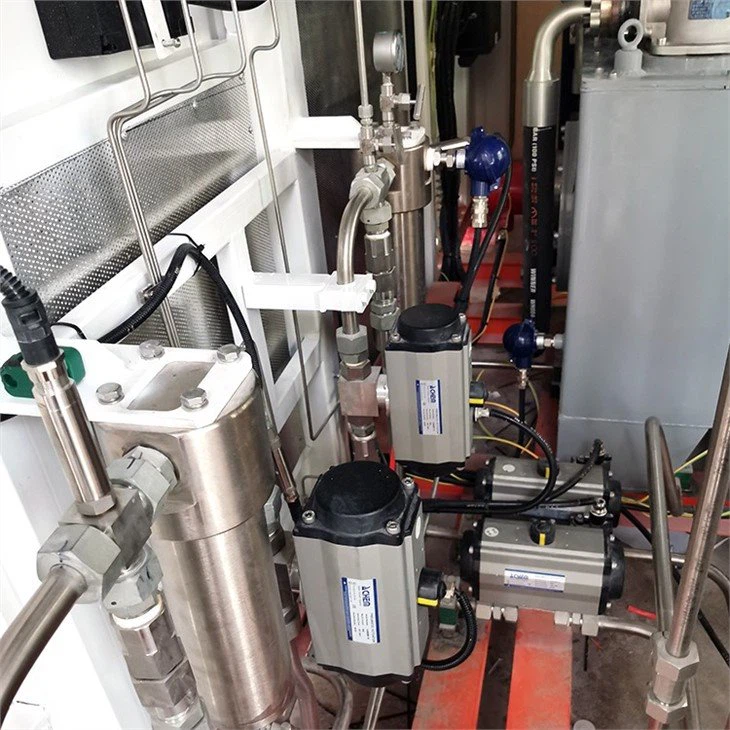
Compliance With Regulations
Adhere to local and national regulations governing gas station equipment operations. Ensure that the equipment meets safety and environmental standards to promote efficient and compliant operation.

Emergency Shutdown Procedures
Familiarize yourself and your team with emergency shutdown procedures. In the event of any safety concerns or malfunctions, know how to safely and quickly shut down the equipment to prevent accidents.
The Key Components of a LNG Station
LNG Storage Tanks:
Large-capacity cryogenic tanks to store liquified natural gas. These tanks should be designed to handle extreme low temperatures and high pressures.
LNG Dispensers:
Specialized dispensers equipped to handle LNG transfer to vehicles. They should have safety features and be designed for ease of use.
Pumps and Compressors:
High-pressure pumps and compressors to transfer LNG from storage tanks to dispensers. These should maintain the necessary pressure for dispensing.
Vaporizers:
Equipment to convert LNG back into a gaseous state for use in vehicles. Vaporizers may use various methods such as ambient air, water, or electric heating.
Emergency Shutdown System (ESD):
An ESD system to quickly and safely shut down the LNG station in case of emergencies, leaks, or abnormal conditions.
Safety Systems:
Gas detection systems, fire suppression systems, and other safety features to ensure the overall safety of the LNG station.
Control and Monitoring System:
A centralized control system to monitor and control various components of the LNG station, ensuring seamless and safe operations.
Pipeline and Transfer Hoses:
High-quality transfer hoses and pipelines to connect different components of the LNG station, facilitating the transfer of LNG from storage to dispensing points.
Storage Area and Containment:
Adequate infrastructure for the safe storage and containment of LNG, including bund walls and secondary containment systems.
Instrumentation and Measurement Devices:
Instruments for measuring LNG levels, temperatures, and pressure, ensuring accurate monitoring and control.
LNG Loading/Unloading Equipment:
Equipment for loading LNG from transportation vehicles (trucks, ISO containers) into the station's storage tanks.
Electrical Infrastructure:
Electrical systems and components to power various equipment and ensure reliable operation.
Certifications


Our Factory

Frequently Asked Questions
Endurance Energy Equipment Co., Ltd. is well-known as one of the leading lng station manufacturers and suppliers in China. Please feel free to buy high quality lng station made in China here from our factory. For more information, contact us now.
Containerized LNG Station for Natural Gas Vehicles, LNG Refueling Station, LNG Dispensing Station